With electricity prices continuously rising and load shedding still a major issue across Pakistan, more and more homeowners and businesses are turning to solar power. However, one of the most important decisions you will make when going solar is understanding how you will be billed for the electricity your system produces. This brings us to the two most talked-about terms in the solar industry today: **Net Metering** and **Net Billing**.

In this detailed guide, we will explain both systems in simple language, compare them side by side, and help you decide which option is better for your home or business in Pakistan in 2026.

What is Net Metering and How Does It Work?

Net Metering is a simple and highly beneficial billing mechanism that allows solar power system owners to export excess electricity to the national grid and receive full credit for it at the same retail rate they pay for electricity.

When your solar panels produce more electricity than your home or office needs during the day, the surplus power automatically flows back into the grid through a bi-directional meter. This meter spins backward, giving you credit for every unit exported. At night or on cloudy days, when your solar production is low, you draw electricity from the grid as usual.

At the end of each billing month, the utility company calculates the difference between the units you imported and the units you exported. You only pay for the “net” units consumed. If you export more electricity than you consume in a month, the extra units are usually carried forward to the next billing cycle as credit.

Net Metering Policy in Pakistan – Current Status in 2026

In Pakistan, Net Metering is regulated by NEPRA (National Electric Power Regulatory Authority) and supported by all major distribution companies including K-Electric, LESCO, MEPCO, IESCO, FESCO, and others. The policy allows residential, commercial, and industrial consumers to install solar systems and benefit from net metering.

The approval process involves submitting an application to your local DISCO along with system details, single-line diagram, and other required documents. Once approved, a bi-directional meter is installed free of cost or at a nominal fee by the utility company.

Thousands of solar users across Karachi, Lahore, Islamabad, Rawalpindi, Multan, Faisalabad, and other cities are already enjoying massive savings through net metering. Many households have reduced their monthly electricity bills by 80-100%, and in some cases, they even receive payments from the utility for excess generation.

What is Net Billing?

Net Billing (also called Net Energy Billing) is a different billing arrangement where the electricity you take from the grid (import) and the electricity you send to the grid (export) are treated separately and valued at different rates.

Under Net Billing, you pay the full retail tariff for every unit you import from the grid. However, the excess electricity you export is compensated at a much lower “export rate” or “buyback rate” decided by the regulator or utility. This export rate is usually 30-50% lower than the normal electricity tariff.

This means even if your solar system produces a lot of extra power, you will not get the same value for it as you would under Net Metering.

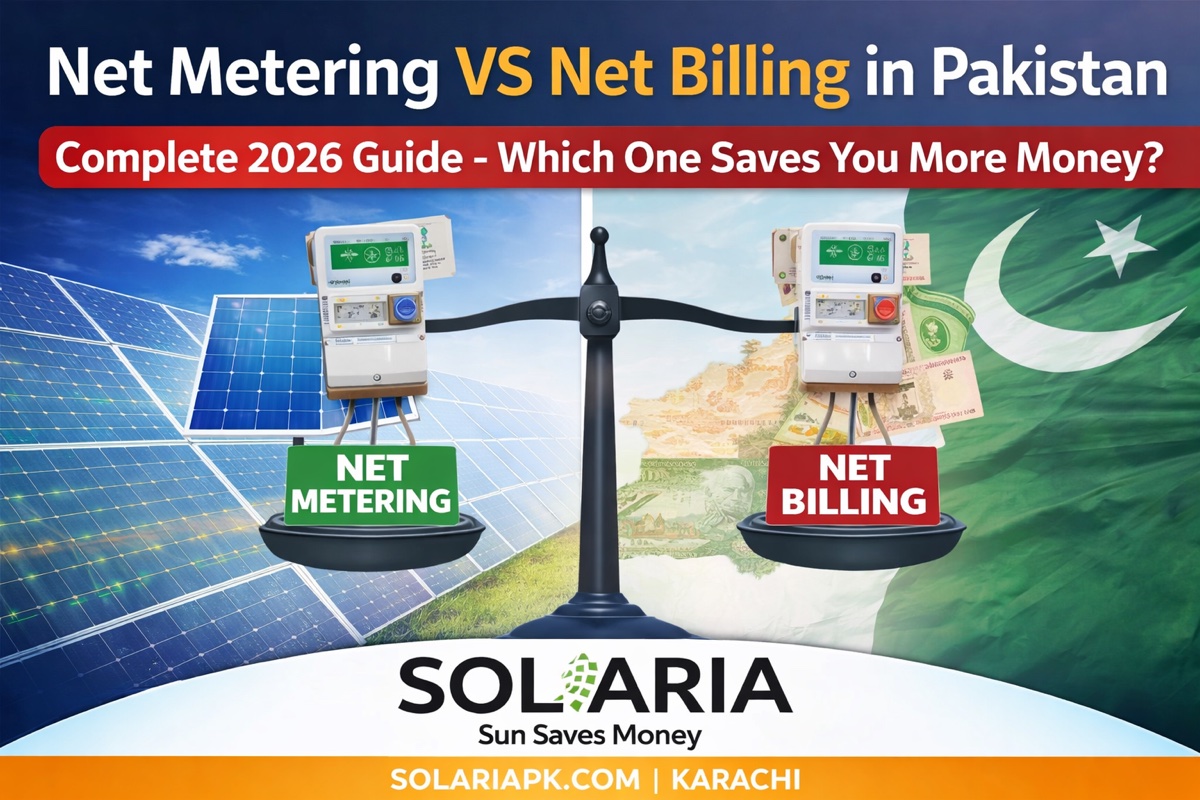
Net Metering vs Net Billing – Detailed Comparison

Here is a clear side-by-side comparison to help you understand the real difference:

  • Billing Method: Net Metering nets import and export at the same rate. Net Billing treats import and export separately at different rates.
  • Value of Exported Units: Net Metering gives full retail credit (1 exported unit = 1 saved unit). Net Billing pays lower export rate.
  • Monthly Bill Impact: Net Metering can bring your bill to zero or even generate credit. Net Billing usually results in a higher remaining bill.
  • Payback Period: Net Metering offers faster payback (3-5 years). Net Billing extends payback period significantly.
  • Incentive for Larger Systems: Net Metering encourages installing bigger systems. Net Billing discourages oversized systems.

Real-Life Example: How Much Can You Save?

Let’s assume you have a monthly consumption of 600 units and your 10kW solar system produces 900 units in a month.

Under Net Metering:
You export 300 units and get full credit for them. Your net consumption becomes zero. You pay nothing for electricity that month and may even carry forward credits.

Under Net Billing:
You pay full price for any units imported during low production hours and receive only a reduced rate for the 300 exported units. Your monthly savings drop dramatically compared to net metering.

Over 25 years (typical solar panel lifespan), this difference can amount to hundreds of thousands of rupees in extra savings with Net Metering.

Pros and Cons of Net Metering in Pakistan

Advantages:

  • Highest possible savings on electricity bills
  • Fastest return on investment
  • Full value for every unit your solar system produces
  • Excellent protection against future electricity price hikes
  • Simple and transparent billing process
  • Encourages maximum utilization of solar energy

Disadvantages:

  • Some utilities may impose caps on system size
  • Approval process can take time if documents are incomplete

Why Net Billing is Less Favorable for Solar Users

Net Billing reduces the financial attractiveness of solar power because the compensation for exported electricity is much lower. This directly increases the payback period and lowers the overall return on investment (ROI).

In countries where Net Billing has replaced Net Metering, many homeowners have reported significantly reduced interest in installing larger solar systems. For Pakistan, where electricity tariffs are already high and rising, switching to Net Billing would make solar less viable for average households.

Current Policy Situation in Pakistan (2026 Update)

As of 2026, Net Metering is still the primary and most popular mechanism available across Pakistan. However, there have been continuous discussions at NEPRA level about introducing more structured tariffs, including possible shifts toward Net Billing or Time-of-Use (ToU) metering.

This uncertainty makes it even more important to act quickly. Installing a solar system with net metering approval now can lock in the current beneficial policy for the next 25+ years.

How Solaria Private Limited Can Help You

At Solaria Private Limited, we specialize in complete solar solutions including system design, high-quality panel and inverter supply, professional installation, net metering application, and long-term maintenance.

Our experienced team handles the entire net metering process on your behalf — from preparing technical documents to coordinating with your local DISCO. We have successfully helped hundreds of clients in Karachi, Lahore, and across Sindh and Punjab get net metering approval without hassle.

We only recommend systems that are optimized for maximum benefit under the current Net Metering policy so you can enjoy the highest possible savings from day one.

Final Recommendation: Choose Net Metering While It’s Available

If you are serious about going solar in Pakistan, Net Metering is clearly the smarter and more profitable choice. It gives you the maximum financial benefit, fastest payback, and true energy independence from expensive grid electricity and unpredictable load shedding.

Don’t risk waiting for policy changes. The longer you delay, the more money you lose on high electricity bills every month.

Contact Solaria Private Limited today for a free site survey and detailed financial analysis. Our experts will design the perfect solar system for your needs and guide you through the entire process — from installation to getting your net metering approved.

Make the sun your best friend. Stop paying heavy electricity bills and start producing your own clean, reliable, and affordable power with Solaria.

Call us or visit our office to take the first step towards energy freedom and massive long-term savings.

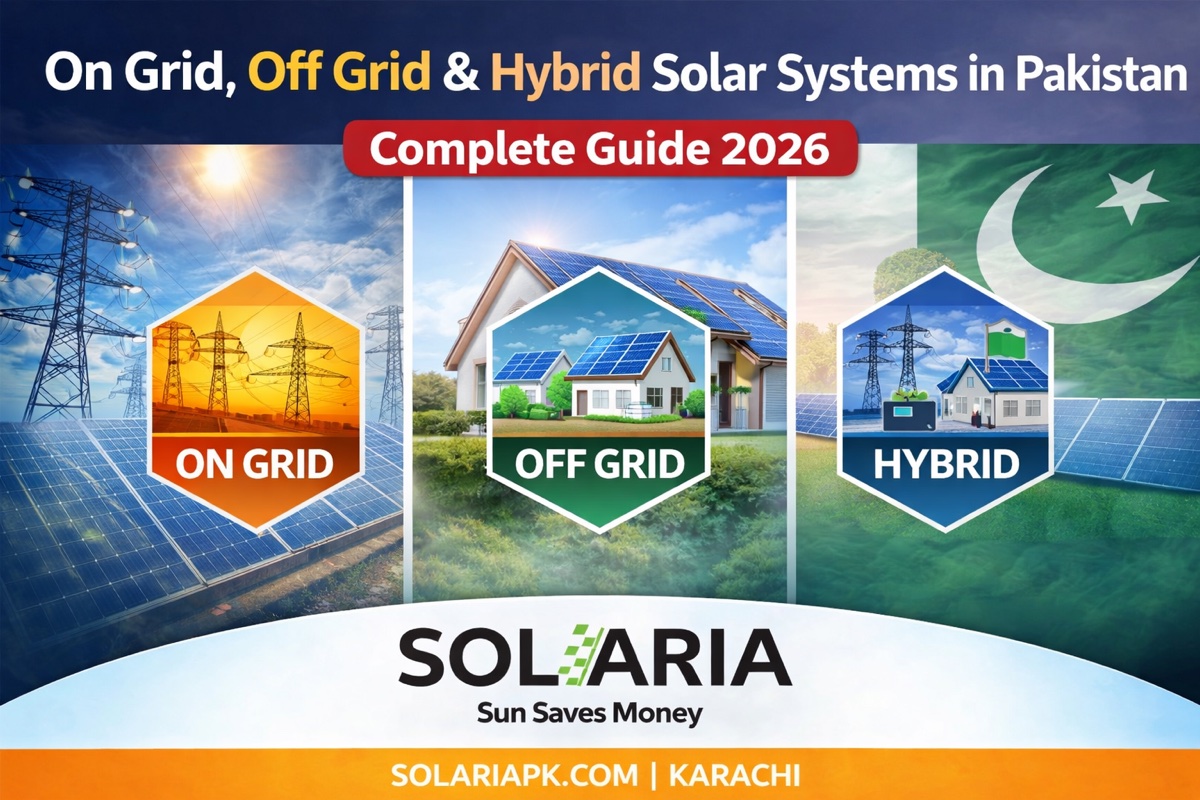
Choosing the right solar power system is one of the most important decisions when switching to solar energy in Pakistan. With frequent load shedding, high electricity bills, and rising tariffs, understanding the three main categories — On Grid System, Off Grid System, and Hybrid System — helps you pick the perfect solution for your home or business.

In this comprehensive guide, we explain each type in detail, compare their pros and cons, and help you decide which solar system is best suited for your needs in Pakistan.

What is an On Grid Solar System?

An On Grid Solar System (also called Grid-Tied Solar System) is the most popular and cost-effective type of solar power setup in Pakistan. It is directly connected to the utility grid (K-Electric, LESCO, MEPCO, etc.) and works in synchronization with it.

During the day, your solar panels generate electricity that first powers your home or office. Any excess electricity is automatically fed back into the national grid through a bi-directional meter under the Net Metering policy. At night or during low sunlight, you draw power from the grid as usual.

This system does not require expensive batteries, making it significantly cheaper than other options. It is ideal for areas where grid electricity is available most of the time.

Advantages of On Grid Solar System

• Lowest upfront cost (no batteries needed)
• Maximum savings through Net Metering – your bill can go to zero or even earn you credit
• No maintenance of batteries
• Can install larger systems easily
• High efficiency as there are fewer energy losses
• Perfect for homes and businesses in major cities like Karachi, Lahore, Islamabad

Disadvantages of On Grid Solar System

• Does not work during power outages (no backup power)
• Completely dependent on the grid’s availability
• You still face load shedding if the grid is down

What is an Off Grid Solar System?

An Off Grid Solar System is completely independent from the national electricity grid. It is designed for areas with no grid access or very unreliable electricity supply. This system includes solar panels, charge controllers, batteries, and inverters.

All the electricity generated by the solar panels is stored in deep-cycle batteries. You use this stored energy whenever needed — day or night. Since there is no connection to the utility grid, you become fully self-sufficient in terms of electricity.

Off Grid systems are commonly used in remote villages, farms, cottages, and locations where extending grid lines is expensive or impossible.

Advantages of Off Grid Solar System

• Complete energy independence – no more load shedding or bills
• Works perfectly in remote areas with no grid connection
• Provides 24/7 backup power through batteries
• Ideal for areas with long hours of load shedding

Disadvantages of Off Grid Solar System

• Very high initial cost due to large battery banks
• Requires regular battery maintenance and replacement every 5-8 years
• You need to carefully manage your energy consumption
• Lower overall efficiency due to battery charging/discharging losses
• Requires bigger solar panel array to charge batteries properly

What is a Hybrid Solar System?

A Hybrid Solar System combines the best features of both On Grid and Off Grid systems. It is connected to the utility grid but also includes battery storage for backup power.

During the day, solar panels power your loads and excess energy can either charge the batteries or be exported to the grid via Net Metering. When the grid goes off due to load shedding, the system automatically switches to battery power, giving you uninterrupted electricity. At night, you can use stored battery power or grid power depending on your settings.

Hybrid systems are becoming increasingly popular in Pakistan because they offer both bill savings and reliable backup during power outages.

Advantages of Hybrid Solar System

• Best of both worlds – Net Metering savings + battery backup
• Uninterrupted power supply even during long load shedding
• Can export excess power to the grid for credits
• Smart energy management with modern hybrid inverters
• Future-proof solution as battery prices continue to drop

Disadvantages of Hybrid Solar System

• Higher initial investment than On Grid systems
• Battery maintenance and eventual replacement required
• Slightly complex installation and monitoring

On Grid vs Off Grid vs Hybrid Solar System – Quick Comparison

Here is a detailed comparison to help you choose the right system:

  • Cost: On Grid (Cheapest) → Hybrid (Medium) → Off Grid (Most Expensive)
  • Backup During Load Shedding: On Grid (None) → Hybrid (Excellent) → Off Grid (Best)
  • Net Metering Benefit: On Grid & Hybrid (Yes) → Off Grid (No)
  • Maintenance: On Grid (Very Low) → Hybrid (Medium) → Off Grid (High)
  • Best For: On Grid (City homes with reliable grid) → Hybrid (Homes wanting savings + backup) → Off Grid (Remote areas, farms)

Which Solar System Should You Choose in Pakistan?

• Choose **On Grid** if you live in a major city, want maximum savings on bills, and have relatively reliable grid supply. It offers the fastest payback period.
• Choose **Hybrid** if you face frequent and long load shedding but still want to benefit from Net Metering and reduce your electricity bills significantly.
• Choose **Off Grid** only if you have no grid connection or the grid is extremely unreliable and you are ready for higher investment and maintenance.

Why Most People in Pakistan Prefer Hybrid Systems in 2026

With improving battery technology and falling prices, Hybrid Solar Systems have become the smart choice for many Pakistani households. You get the benefit of low electricity bills through Net Metering while enjoying uninterrupted power during load shedding hours — the perfect solution for Pakistan’s energy challenges.

Solaria Private Limited – Your Trusted Solar Partner

At Solaria Private Limited, we design and install all three types of solar systems according to your specific needs and budget. Our expert team will visit your site, analyze your electricity consumption, load shedding pattern, and future requirements before recommending the best system for you.

Whether you want a simple On Grid system for maximum savings, a powerful Hybrid system for backup, or a complete Off Grid solution for remote locations — we provide high-quality components, professional installation, net metering assistance (for On Grid & Hybrid), and full after-sales support.

We have successfully installed hundreds of solar systems across Karachi, Sindh, Lahore, and other parts of Pakistan, helping families and businesses achieve energy independence and massive savings.

Take the First Step Towards Energy Freedom Today

Stop suffering from high electricity bills and unpredictable load shedding. Switch to solar and choose the system that best matches your lifestyle and requirements.

Contact Solaria Private Limited now for a free site assessment, detailed quotation, and expert advice on On Grid, Off Grid, or Hybrid Solar Systems. Let us help you make the sun your best friend and secure clean, reliable, and affordable electricity for the next 25 years.

Call us today or visit our office — your journey to energy independence starts here with Solaria Private Limited.

Pakistan is blessed with one of the highest solar irradiance levels in the world, yet millions of households and businesses still suffer from expensive electricity bills and frequent load shedding. Solar energy offers a clean, reliable, and cost-effective solution to these long-standing energy challenges. In this detailed blog, we explore what solar energy is and why it has become critically important for Pakistan in 2026.

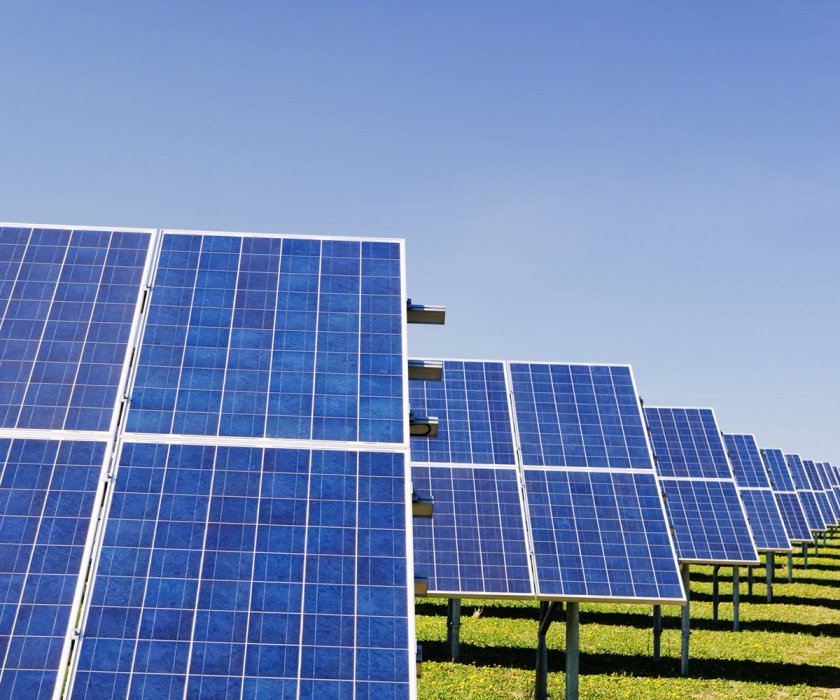
Solar energy is the power harnessed directly from the sun’s rays using solar panels (photovoltaic cells). These panels convert sunlight into electricity without any moving parts, fuel, or pollution. The generated electricity can be used immediately to power homes, offices, industries, schools, hospitals, and farms.

Unlike traditional fossil fuels such as coal, gas, or oil, solar energy is renewable, abundant, and free. The sun rises every day, providing Pakistan with more than 300 sunny days a year — one of the best conditions for solar power generation in the world.

Why Solar Energy is Extremely Important for Pakistan

Pakistan faces a serious energy crisis. Rapid population growth, increasing industrialization, and outdated power infrastructure have created a massive gap between electricity supply and demand. Load shedding remains a daily reality in both urban and rural areas, while electricity tariffs continue to rise every year.

Solar energy addresses these problems at their root. It reduces dependence on expensive imported fossil fuels, lowers electricity bills dramatically, provides backup during load shedding, and helps protect the environment. For a developing country like Pakistan, shifting to solar is not just an option — it has become a necessity.

1. Solving Load Shedding and Ensuring Uninterrupted Power

One of the biggest advantages of solar energy is that it gives you control over your own electricity production. With a properly designed solar system (especially Hybrid or Off Grid), you can enjoy 24/7 power even when the national grid fails. No more dark nights, no more spoiled food in refrigerators, and no more disruption to your work or studies.

In cities like Karachi, Lahore, Islamabad, and across Sindh and Punjab, thousands of families have already eliminated load shedding from their lives by installing solar power systems.

2. Massive Savings on Electricity Bills

Electricity bills in Pakistan have become a heavy burden for middle-class families and businesses. With Net Metering, a well-sized solar system can reduce your monthly bill by 70% to 100%. Many users report zero electricity bills for months and sometimes even receive payments from their utility company for excess power exported to the grid.

Over the 25-year lifespan of solar panels, the total savings can reach millions of rupees, making solar one of the best financial investments you can make today.

3. Energy Independence and Security

By installing solar panels on your rooftop, you become less dependent on K-Electric, WAPDA, or any other utility company. You produce your own clean electricity and are no longer at the mercy of rising fuel prices, circular debt, or political decisions that affect power supply.

This energy independence is especially valuable for industries, hospitals, schools, and commercial buildings that cannot afford even a few hours of power outage.

4. Environmental Benefits and Fighting Climate Change

Solar energy is clean and green. Unlike coal or gas power plants, solar panels produce no harmful emissions, no smoke, and no noise. By switching to solar, you reduce your carbon footprint and contribute to a healthier environment for future generations.

Pakistan is already facing serious effects of climate change — rising temperatures, unpredictable weather, and water shortages. Widespread adoption of solar energy can help mitigate these issues by reducing reliance on fossil fuels.

5. Economic Growth and Job Creation

The solar industry is creating thousands of new jobs across Pakistan — from technicians and installers to engineers, sales professionals, and entrepreneurs. As more people adopt solar, local manufacturing and related businesses are also growing rapidly.

Investing in solar energy supports the national economy while bringing direct financial benefits to your own household or business.

6. Abundant Free Resource – The Sun

Pakistan receives an average of 5.5 to 7.5 kWh/m² of solar radiation daily. This means every square meter of your rooftop can generate significant amounts of free electricity. The sun is not going anywhere — it is a permanent, inexhaustible source of energy that costs nothing after the initial installation.

Solar Energy vs Traditional Electricity – Why Solar Wins

Traditional electricity in Pakistan depends on expensive imported fuel, old transmission lines, and frequent breakdowns. Solar energy, on the other hand, is decentralized, requires almost no fuel, has minimal maintenance, and lasts for 25-30 years with high performance.

Once installed, your solar system keeps producing electricity with almost zero running cost, protecting you from future electricity price hikes.

How Solaria Private Limited is Promoting Solar Energy in Pakistan

At Solaria Private Limited, we believe solar energy is the future of Pakistan. We provide complete solar solutions including On Grid, Off Grid, and Hybrid systems tailored to your specific needs and budget. Our team handles everything — from free site assessment and system designing to professional installation, net metering approval, and reliable after-sales service.

We use high-quality solar panels, inverters, and batteries from trusted international brands to ensure long life and maximum performance. Hundreds of satisfied customers across Karachi, Sindh, Lahore, and other cities have already transformed their energy situation with our help.

Make the Smart Choice Today

Solar energy is no longer a luxury — it is a smart, practical, and necessary step for every Pakistani who wants lower bills, reliable power, and a cleaner future. The longer you wait, the more money you lose on ever-increasing electricity tariffs and the more you suffer from load shedding.

Take control of your energy future. Harness the power of the sun and enjoy uninterrupted, affordable electricity for decades to come.

Contact Solaria Private Limited today for a free consultation and site survey. Our experts will design the perfect solar energy system for your home or business and guide you through every step of the process.

Make the sun your best friend. Switch to solar energy with Solaria Private Limited and start saving money while securing a brighter, cleaner tomorrow for your family and Pakistan.
A complete comparison between on-grid net metering and off-grid battery systems for Pakistani homeowners and businesses.

Understand system sizing, electricity generation per month, and expected ROI for residential rooftop solar power.

Step-by-step guide to bidirectional meters, application requirements, and monetizing your excess daytime solar power.

Compare battery lifespan, cycle count, and performance for hybrid solar inverters in Karachi and across Pakistan.

Essential maintenance routines, dust removal best practices, and inverter diagnostics to keep solar efficiency above 95%.

Duis mollis, est non commodo luctus, nisi erat porttitor ligula, eget lacinia odio sem nec elit. Morbi leo risus, porta ac consectetur ac, vestibu lum at eros. Nulla vitae elit libero, a pharetra augue.

Duis mollis, est non commodo luctus, nisi erat porttitor ligula, eget lacinia odio sem nec elit. Morbi leo risus, porta ac consectetur ac, vestibu lum at eros. Nulla vitae elit libero, a pharetra augue.